 en
en vi
vi es
es th
th pt
pt ms
ms ko
ko ru
ru fr
fr de
de ar
ar hi
hi id
id





Oct 10,2026
Double-Sided Tape vs. Transfer Tape: What Is the Difference?
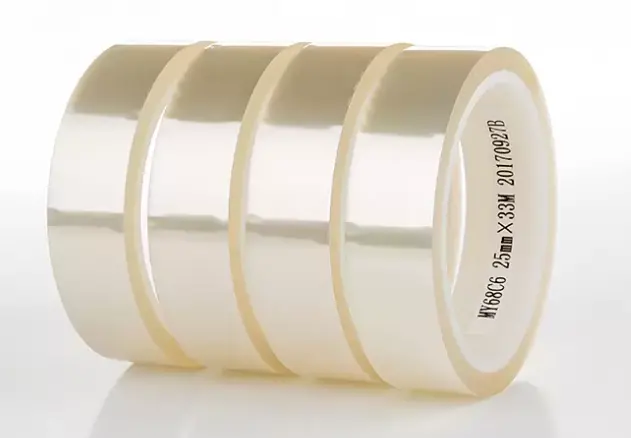
Double-sided tape is an adhesive tape designed to bond two surfaces together. Unlike single-sided tape, which has adhesive on only one side, double-sided tape carries adhesive on both sides of a central layer or carrier. A release liner protects the adhesive until the tape is ready to be applied.
The carrier is an important part of the tape's construction. Depending on the product, it may be made from PET film, tissue paper, nonwoven material, cloth, or foam. Each construction offers different handling characteristics and bonding behavior. For example, a PET carrier can provide dimensional stability during converting and application, while foam-based double-sided tape can accommodate certain surface irregularities and help distribute stress between bonded components.
The carrier also makes double-sided tape easier to handle in many assembly processes. It helps maintain the tape's shape during cutting, positioning, and application, which is particularly useful when manufacturers need consistent dimensions or repeatable placement across large production runs.
Industrial double-sided tape is used in applications such as nameplate mounting, component assembly, automotive trim attachment, appliance manufacturing, and bonding plastic or metal parts. The appropriate construction depends on the substrates, required bond strength, available bonding area, operating environment, and assembly process.
For manufacturers comparing different industrial double-sided tapes, the key is to look beyond the adhesive alone. The carrier material, adhesive formulation, tape thickness, and release liner can all affect how the tape performs in a finished product.
Adhesive transfer tape consists of a thin layer of pressure-sensitive adhesive carried on a release liner, generally without a separate film, tissue, or foam carrier. During application, the adhesive is transferred to a substrate, and the liner is removed before the second surface is bonded.
This construction creates a direct adhesive bond between the two materials without adding a conventional carrier layer. It is often suitable for applications where a thin bond line, low profile, or close contact between surfaces is important.
Transfer tape is commonly used for bonding lightweight components, attaching labels and graphic materials, laminating flexible materials, and mounting parts where a conventional tape carrier may add unnecessary thickness. Depending on the adhesive formulation and product design, it can also be suitable for die-cut parts and automated assembly processes.
However, the absence of a carrier changes how transfer tape behaves during handling and application. The exposed adhesive layer may be more difficult to position or process than a carrier-supported tape, especially when working with narrow strips, intricate shapes, or flexible substrates. Correct liner handling, application pressure, and process control are therefore important.
The term transfer tape can also refer to tape used to move vinyl graphics, lettering, or other cut designs from a backing sheet to a target surface. That is a different product category. In this article, transfer tape refers to pressure-sensitive adhesive transfer tape used for bonding, rather than graphic application tape.
When a project calls for a thin adhesive layer without a separate carrier, adhesive transfer tape may be a suitable option, provided the adhesive is compatible with the materials and service conditions.
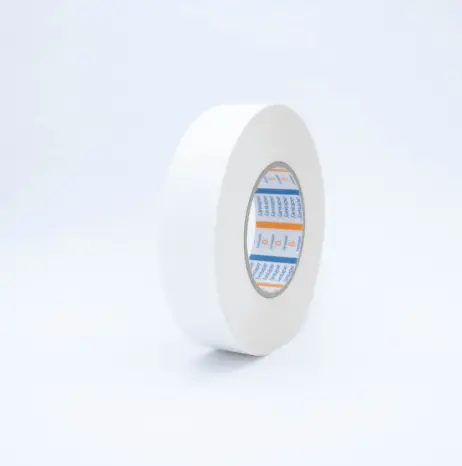
The main difference between double-sided tape and adhesive transfer tape is their construction. Double-sided tape typically includes a carrier coated with adhesive on both sides, while transfer tape consists primarily of an adhesive layer supported by a release liner before application.
That structural difference affects thickness, handling, dimensional stability, and suitability for different manufacturing processes. It does not automatically determine which product has better adhesion or durability. Those properties depend on the specific adhesive system, substrates, and application conditions.
| Comparison factor | Double-sided tape | Adhesive transfer tape |
|---|---|---|
| Basic construction | Adhesive on both sides of a carrier | Adhesive layer on a release liner, generally without a separate carrier |
| Dimensional stability | The carrier can help the tape retain its shape | Depends more heavily on the adhesive layer, liner, and handling process |
| Bond-line thickness | Includes the carrier and adhesive layers | Can provide a thin bond line without a separate carrier |
| Conformability | Depends on the carrier; foam versions can accommodate some uneven surfaces | Can conform closely to suitable surfaces, depending on adhesive properties |
| Gap filling | Foam constructions may accommodate certain gaps and irregularities | Generally not the first choice when substantial gap filling is required |
| Converting and handling | Carrier can make cutting and positioning easier | May require more careful liner handling and process control |
| Typical selection priority | Carrier support, handling stability, or cushioning | Thin bonding, low profile, or direct adhesive transfer |
A carrier-supported tape can be easier to handle when the bonding component has a defined shape or must be placed accurately. The carrier provides a physical layer that helps the tape maintain its dimensions during cutting, transport, and assembly. This can be valuable in high-volume manufacturing, where consistent placement and repeatable processing are important.
Transfer tape eliminates that separate carrier, which can be advantageous when the design calls for a thin adhesive layer. However, the adhesive may be more sensitive to stretching, wrinkling, or shifting during handling, depending on its formulation and thickness. For complex die-cut parts or fast production lines, manufacturers should evaluate the tape using the actual converting and application method rather than relying on the product description alone.
Transfer tape is often considered when the available space for bonding is limited. Without a separate carrier, it can create a low-profile bond line between suitable surfaces. This is useful for laminating thin materials or attaching lightweight components where additional thickness could affect fit or appearance.
Double-sided tape can still be thin, depending on its construction. A thin PET- or tissue-carrier tape may be appropriate for precise assembly, while a foam-based version may be better suited to applications requiring cushioning or accommodation of surface irregularities. The relevant comparison is therefore the thickness and construction of the specific products, not simply the names of the two tape categories.
Surface condition also matters. A thin adhesive layer may work well on smooth, clean, compatible surfaces but may struggle to make sufficient contact with rough or uneven substrates. Where a gap needs to be filled or movement between parts must be accommodated, the tape's thickness, compressibility, and mechanical properties become important selection factors.
Neither transfer tape nor double-sided tape is inherently stronger in every application. Peel adhesion, shear resistance, temperature performance, and long-term durability depend on the adhesive chemistry, tape construction, surface energy of the substrates, and conditions after bonding.
For example, a high-performance transfer tape may deliver reliable bonding on a suitable surface, while a double-sided tape with a compatible carrier and adhesive may be better suited to a different assembly. A tape that performs well on metal may not behave the same way on low-surface-energy plastics, painted surfaces, or textured materials.
Environmental conditions should be considered at the same time. Heat, humidity, moisture, UV exposure, cleaning agents, and chemical contact can affect the adhesive or the materials being bonded. If the finished product will operate outdoors, near a heat source, or in contact with chemicals, check the technical data for the exact product and verify performance under representative conditions.
The most suitable tape depends on what the assembly needs from the bond. The following examples illustrate common selection priorities rather than strict rules.
Double-sided tape is often a practical choice when the manufacturing process benefits from a stable carrier, a defined tape thickness, or additional cushioning. Its construction can simplify handling and help maintain consistent placement during assembly.
Common applications include:
These applications do not all require the same tape. For example, bonding a lightweight nameplate to a smooth panel presents different demands from attaching trim to a curved surface. Manufacturers should confirm the required bond strength, substrate compatibility, temperature range, and expected service life before choosing a construction.
Transfer tape is worth considering when the design calls for adhesive without an additional carrier layer. Its thin construction can be useful in laminating and mounting processes where low profile and close contact between materials are priorities.
Typical applications include:
Transfer tape is not automatically the best option for every thin material. Very flexible substrates, narrow adhesive shapes, or high-speed production processes may require careful control to prevent wrinkles, stretching, contamination, or misalignment. In these cases, trial runs can reveal whether transfer tape or a carrier-supported alternative offers better production consistency.
A reliable selection starts with the actual bonding requirements rather than the tape category. Before requesting samples or specifying a product, manufacturers should clarify the following factors.
List both bonding surfaces, including their material, surface finish, and any coatings or treatments. Metal, glass, ABS, polypropylene, painted surfaces, and flexible films can present very different adhesion challenges. Some plastics have low surface energy and may require a specifically formulated adhesive or additional surface preparation.
If the substrate contains release agents, oil, dust, or other contamination, even a suitable tape may perform poorly. Confirm the recommended cleaning method and test the bond on production-representative materials.
If the assembly has tight dimensional tolerances or limited clearance, a transfer tape may be worth evaluating because it does not use a conventional carrier. If the design requires a more structured tape, a carrier-supported double-sided tape may be more suitable.
Do not compare products by category name alone. Check the total thickness, including the adhesive layers and carrier where applicable, and consider how the finished bond behaves under pressure and during service.
Smooth, flat surfaces may allow a thin adhesive layer to make good contact. Curved, textured, or slightly uneven surfaces may require a different adhesive construction or greater thickness to maintain contact.
The direction and type of stress also matter. Peel forces, sustained shear loads, vibration, thermal expansion, and repeated movement can affect the bond differently. Where the assembly experiences significant mechanical stress, evaluate the complete bonded system rather than treating initial tack as proof of long-term performance.
Consider how the tape will be converted, supplied, positioned, and applied. Will it be die-cut into small shapes? Applied manually or by an automated system? Used on a continuous roll or as individual parts? Does the production line require fast placement and consistent alignment?
A carrier-supported double-sided tape may be easier to handle in some processes. Transfer tape may reduce material thickness but require more precise liner control. Sample testing under the intended production conditions can help identify problems before the tape is adopted at scale.
Confirm the expected temperature range, humidity, moisture exposure, UV exposure, chemical contact, and service life. Also consider whether the bonded components will expand or contract at different rates.
Technical data sheets can narrow the options, but application testing remains important when the bond is safety-critical, difficult to replace, or exposed to demanding conditions. If a product must meet a particular industry standard, verify the relevant documentation for the specific tape rather than assuming that every product in a category has the same qualifications.
Once a shortlist has been developed, test the candidate tapes with the actual substrates and application method. Allow for the recommended application pressure and bonding time, and evaluate performance after the appropriate dwell period. Depending on the project, useful checks may include peel adhesion, shear holding power, dimensional stability, environmental aging, and ease of removal or repositioning during assembly.
For OEM projects, it is also worth confirming roll width, available thicknesses, liner requirements, die-cutting options, and supply consistency. A tape that performs well in a laboratory test must also be practical to process and purchase at the required production volume.
The difference between double-sided tape and transfer tape comes down primarily to construction and the demands of the bonding process. Double-sided tape offers a carrier-supported structure that can improve handling stability and, in some constructions, provide cushioning or accommodate surface irregularities. Adhesive transfer tape offers a thin adhesive layer without a conventional carrier, making it useful for low-profile bonding and selected lamination applications.
Neither option is universally better. The right choice depends on the substrates, required thickness, surface condition, mechanical stress, environmental exposure, and production method. Comparing the technical specifications of actual products and testing them under representative conditions is the most dependable way to choose a tape that will perform consistently in the finished assembly.