 en
en vi
vi es
es th
th pt
pt ms
ms ko
ko ru
ru fr
fr de
de ar
ar hi
hi id
id





Oct 10,2026
Double-Sided Tape vs. Transfer Tape: What Is the Difference?
Powder coating and electroplating place very different demands on masking materials. A tape that works well for protecting a flat surface during powder coating may fail when exposed to plating chemicals, elevated temperatures, or prolonged immersion. The right choice depends less on the tape’s general adhesive strength than on what must be protected, what process it will face, and how cleanly the masking needs to be removed afterward.
For manufacturers, the practical question is not simply which masking tape has the strongest adhesion. The better question is whether the tape can maintain its bond and dimensional stability throughout the process without leaving adhesive residue, lifting at the edges, or allowing coating or plating solution to reach the protected area.
Powder coating is primarily a heat and surface-protection challenge. The masked component may pass through pretreatment, powder application, and an oven cycle. The tape therefore needs sufficient temperature resistance, stable adhesion, and clean removal after curing.
Electroplating introduces another set of risks. Depending on the process, the part may encounter acidic or alkaline solutions, cleaning agents, rinsing, and prolonged immersion. A tape suitable for dry powder-coating masking is not automatically suitable for chemical exposure.
Process | Main masking risks | Important tape properties |
Powder coating | Oven heat, powder penetration, edge lifting | Heat resistance, edge adhesion, clean removal |
Electroplating | Chemical exposure, immersion, solution seepage | Chemical resistance, stable adhesion, low residue |
Spray coating | Overspray, solvent exposure, surface contamination | Conformability, surface protection, clean peel |
Anodizing | Acidic electrolyte, immersion, edge seepage | Chemical resistance, dimensional stability |
This distinction is important when choosing masking tape for powder coating versus tape intended for electroplating protection.
Powder coating commonly involves elevated curing temperatures, so the tape backing and adhesive must remain stable during the oven cycle. A tape that softens excessively can shrink, curl, lose adhesion, or leave adhesive behind after curing.
The temperature rating on a datasheet is useful, but it should not be treated as the only selection criterion. Actual performance depends on exposure time, substrate temperature, curing conditions, and adhesive behavior at elevated temperatures. A tape that performs well during a short exposure may behave differently when held at the same temperature for a longer cycle.
For production qualification, check the tape under the actual process conditions and pay particular attention to:
· Maximum process temperature and actual dwell time
· Adhesive residue after the complete curing cycle
· Edge stability around holes, corners, threads, and sharp transitions
For applications involving repeated oven cycles or sensitive finished surfaces, high-temperature masking tape should be evaluated under real production conditions rather than selected solely from a catalog temperature figure.
Insufficient adhesion allows the tape to lift when powder is applied or while the component moves through production. Excessive adhesion creates a different problem: difficult removal, adhesive transfer, or even damage to the finished surface.
The better target is controlled adhesion. The tape should remain firmly attached throughout masking and coating while still allowing operators to remove it without excessive force.
Surface energy also matters. Bare metal, anodized aluminum, painted surfaces, plastics, and previously coated components interact with adhesives differently. A tape that performs well on one substrate may require a different adhesive system on another.
Flat panels are relatively straightforward to mask. Complex components require much more attention.
Threads, holes, grooves, sharp edges, and recessed areas create locations where powder can penetrate or where tape may fail to conform. On these parts, conformability and edge control can be more important than simply choosing a tape with higher peel adhesion.
A practical masking process begins by identifying exactly which surfaces must remain free of powder. The production team can then determine whether those areas are best protected with tape, plugs, caps, or a combination of masking methods.
For large flat areas, tape provides efficient temporary surface protection. For precision openings and threaded features, dedicated masking accessories may offer better dimensional control and repeatability.
Electroplating exposes masking materials to process chemicals that may be acidic, alkaline, or solvent-based. The tape needs to maintain its physical integrity and adhesive bond without allowing the solution to migrate underneath the masking.
This makes masking tape for electroplating fundamentally different from ordinary painting tape.
A suitable tape should be assessed for:
· Resistance to the actual plating bath and pretreatment chemicals
· Adhesive stability during immersion
· Resistance to edge lifting and solution seepage
· Clean removal after processing
The exact chemical composition and exposure time should be provided to the tape supplier before product selection. “Chemical resistant” is too broad to serve as a reliable specification because resistance to one chemical does not guarantee resistance to another.
A tape can have excellent peel adhesion and still fail during electroplating if liquid reaches the masked boundary.
For this reason, the quality of the masking edge deserves particular attention. On curved or irregular components, a flexible tape may provide a more reliable seal than a stiff backing. Application pressure is also important because incomplete contact can create microscopic channels beneath the tape.
Surface preparation is equally important. Oil, moisture, dust, polishing compounds, and other contaminants can compromise adhesion before the part even enters the plating process.
There is no single backing material that works best for every masking operation.
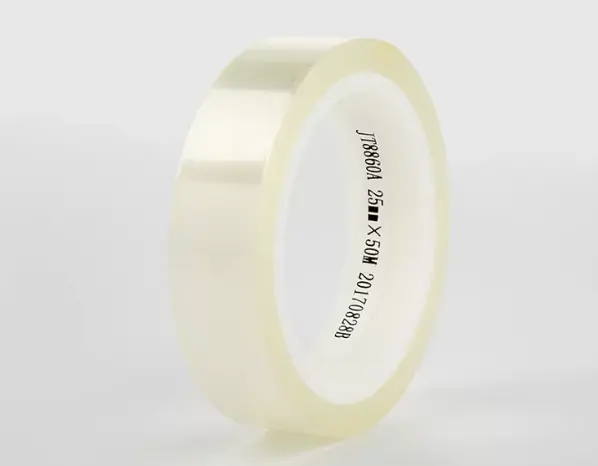
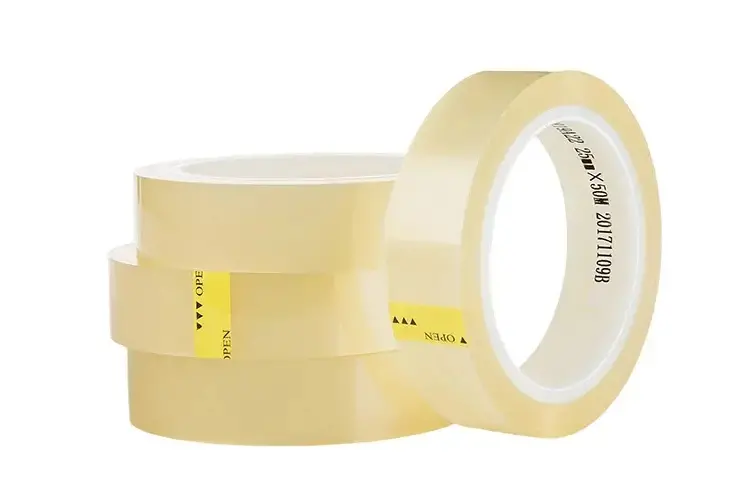
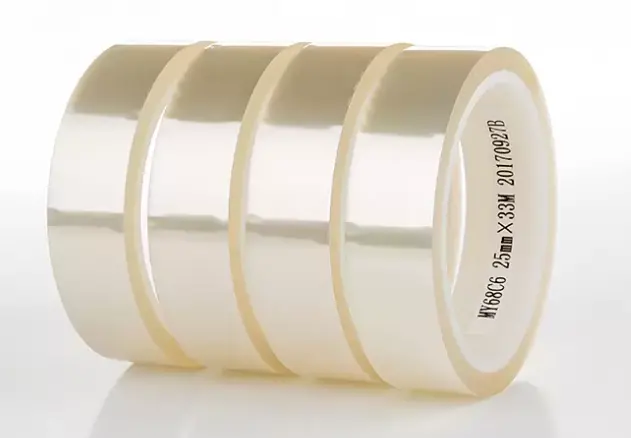
PET masking tape is often considered when dimensional stability and a defined masking edge are important. Its film backing can be useful when the boundary between the protected and coated area needs to remain consistent throughout processing.
For manufacturers comparing different constructions, PET Masking Tape can be evaluated according to the actual substrate, temperature, coating process, and removal requirements.
Crepe paper tape provides greater flexibility and conformability, making it useful for curved surfaces and general industrial masking. It is also easy to tear and handle manually, which can be valuable when masking involves frequent changes in part geometry.
Specialty high-temperature or chemical-resistant constructions become more appropriate when conventional masking tapes cannot tolerate the process conditions.
Tape type | Typical advantage | Main consideration |
PET masking tape | Stable backing and defined masking edge | Match adhesive to substrate and process temperature |
Crepe paper tape | Flexible and easy to handle | Verify temperature and chemical resistance |
High-temperature tape | Suitable for elevated-temperature processes | Confirm dwell time and removal behavior |
Chemical-resistant specialty tape | Better suited to aggressive processing | Test against the actual chemical system |
For manufacturers comparing PET masking tape for powder coating with paper-based alternatives, the decision should be based on masking precision, curing conditions, substrate, and removal method rather than backing material alone.
The same masking tape can behave differently on stainless steel, aluminum, copper, painted metal, plastics, and finished surfaces.
Before approving a tape, production teams should determine whether the substrate is bare or coated, smooth or textured, and clean or contaminated by oil, release agents, or processing residues. Surface condition can significantly change adhesive performance even when the tape itself has not changed.
The broader masking tape applications should also be considered when evaluating a tape construction for a particular production process.
A qualification test should use actual production substrates whenever possible. Test panels made from a different material can produce misleading results, particularly when adhesive compatibility is close to the performance limit.
Tape selection becomes much more reliable when the qualification test reproduces the actual manufacturing sequence.
Instead of testing adhesion in isolation, run the tape through the relevant process:
cleaning → masking → coating or plating → curing or processing → cooling or rinsing → tape removal
During the trial, inspect both the masking boundary and the protected surface. Look for powder or plating penetration, edge lifting, adhesive transfer, tearing, substrate discoloration, and residue.
For powder coating, particular attention should be paid to the tape condition immediately after oven curing. For electroplating, inspect both the tape edge and protected area after chemical exposure and rinsing.
The objective is not to find the tape with the highest laboratory adhesion number. It is to identify the construction that produces the lowest total production risk.
A common purchasing mistake is comparing products using a single number, such as tensile strength, peel adhesion, or temperature rating.
A more useful specification combines the conditions that actually determine production performance:
Selection factor | Powder coating | Electroplating |
Temperature resistance | Critical | Process-dependent |
Chemical resistance | Process-dependent | Critical |
Edge adhesion | Critical | Critical |
Conformability | Important | Important |
Clean removal | Critical | Critical |
Residue control | Critical | Critical |
Substrate compatibility | Critical | Critical |
This approach also makes supplier discussions more productive. Instead of asking for “strong masking tape,” provide the substrate, process temperature, exposure duration, chemicals involved, masking dimensions, and required removal condition.
That information gives the tape manufacturer enough context to recommend a suitable construction rather than simply offering the strongest available adhesive.
Jantape's masking range covers different industrial surface-protection requirements, including PET masking tape, crepe paper masking tape, and other specialized adhesive tape constructions. For powder coating, electroplating, painting, or electronic manufacturing, the appropriate product should be matched to the actual substrate and process conditions rather than selected from the tape category alone.
For example, a manufacturer working with electronic components may prioritize dimensional stability and clean removal, while a powder-coating application may place greater emphasis on oven exposure and edge definition. When flexibility and manual application are more important, a paper-based masking construction may be a better starting point.
A production trial remains the most reliable final step. If the process involves unusual temperatures, aggressive chemicals, or sensitive finished surfaces, providing the supplier with complete process details before sampling can prevent several rounds of unsuitable tape testing.
Powder coating and electroplating should not be treated as interchangeable masking applications. Powder coating places greater emphasis on thermal stability and clean removal, while electroplating makes chemical resistance and edge sealing much more important.
The best selection comes from matching the adhesive system, backing material, substrate, temperature, chemical exposure, and removal requirements as one specification. Once those conditions are defined, manufacturers can narrow down suitable tape constructions more efficiently and avoid masking failures that only become visible after an entire production batch has been processed.