 en
en vi
vi es
es th
th pt
pt ms
ms ko
ko ru
ru fr
fr de
de ar
ar hi
hi id
id





Oct 16,2026
What are Splicing Tapes and Why Do They Matter
Choosing a tape for a high-temperature process is not simply a matter of finding the product with the highest temperature rating. A tape may remain intact during heating but leave adhesive residue when removed. Another may withstand the temperature but lift at the edges, allowing paint, plating chemicals, or other process materials to reach areas that should remain protected. These problems can lead to rework, rejected parts, and unnecessary production costs.
The choice between PET tape and PI tape depends on what the tape needs to do during and after heating. Both are used in industrial manufacturing, but their suitability varies with the adhesive system, exposure time, substrate, and application method. Understanding these differences helps manufacturers select a tape that meets the actual process requirements without paying for performance they do not need.
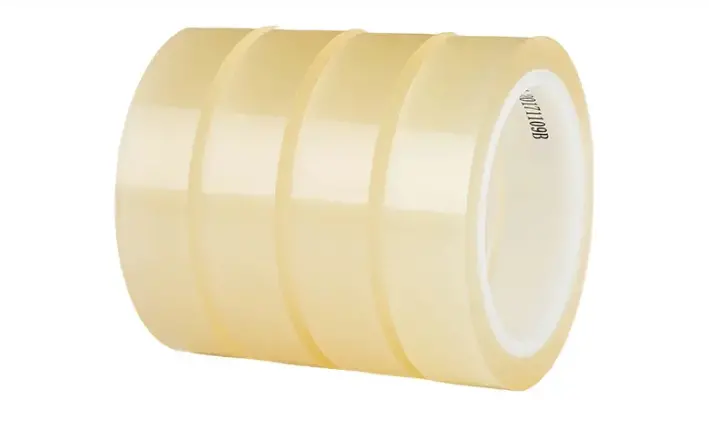
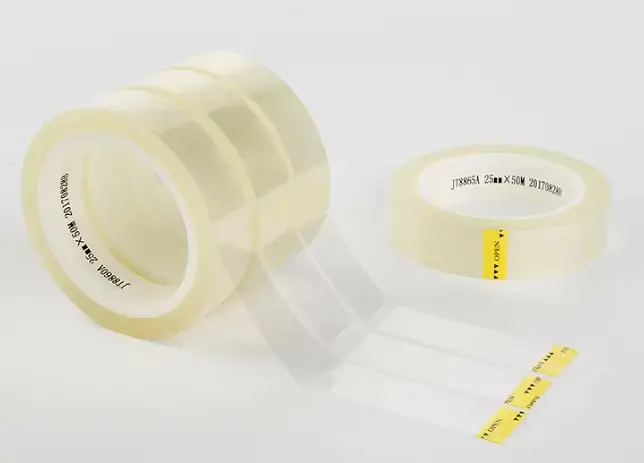
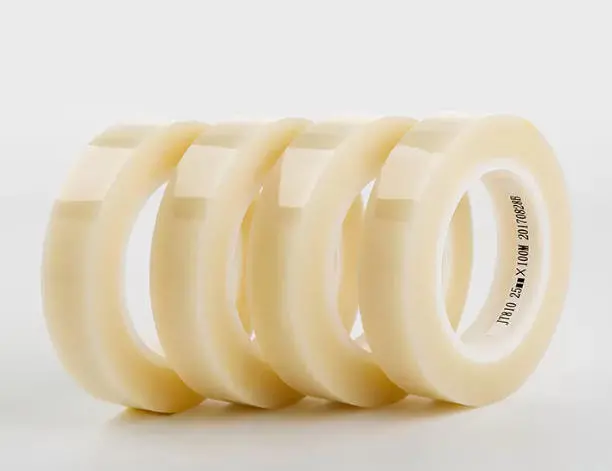
PET tape uses a polyester film as its backing material. It is widely used in industrial masking, surface protection, electrical insulation, and manufacturing processes where dimensional stability and consistent handling are important.
The polyester backing helps the tape maintain its shape during application and removal. Depending on the adhesive and product construction, PET tape can be suitable for masking metal components, protecting selected surfaces during finishing, and insulating parts in electrical or electronic assemblies.
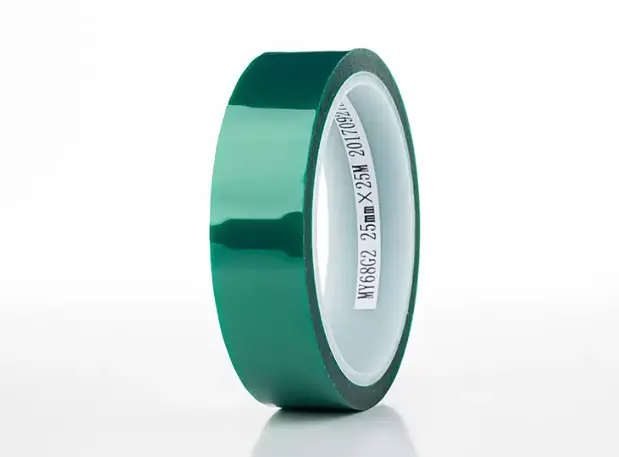
PET tape is not limited to low-temperature applications. Certain PET masking tapes are designed for demanding thermal processes, including powder coating, electroplating, and anodizing. For example, Jantape's MY68G2 PET masking tape is listed with a temperature resistance of 200°C for 30 minutes. This is a product-specific rating, not a universal limit for all polyester tapes.
The adhesive is just as important as the backing. A PET tape designed for general-purpose bonding may not perform well in a heated masking process, even if the polyester film itself remains stable. For applications involving elevated temperatures, buyers should check the complete tape specification, including the adhesive type, recommended exposure time, and removal performance after heating.
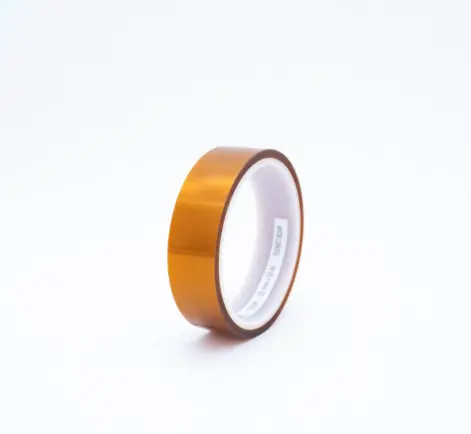
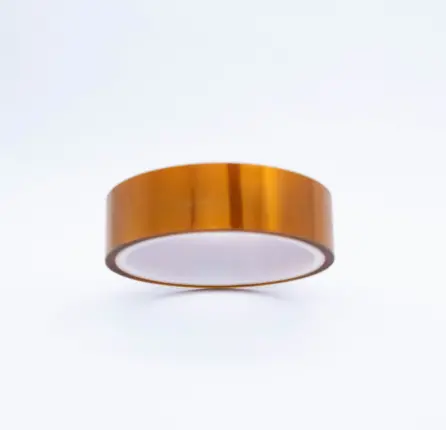
PI tape uses a polyimide film backing, commonly recognized by its amber or golden-brown appearance. It is widely used in electronics manufacturing, electrical insulation, and processes that expose materials to elevated temperatures.
Polyimide film offers a combination of thermal stability, dimensional stability, and electrical insulation properties. These characteristics make PI tape a common choice for PCB soldering processes, component masking, and applications where the tape must maintain its function under demanding thermal conditions.
However, the temperature resistance of PI film should not be confused with the temperature rating of the finished adhesive tape. The adhesive may respond differently to heat than the backing material. A product's practical performance also depends on exposure duration, the bonded surface, application pressure, and the conditions under which the tape is removed.
PI tape is available in different constructions, including single-sided masking tape and double-sided adhesive tape. These products serve different purposes. A single-sided PI tape may be used to protect a surface during processing, while a double-sided version may be intended for bonding components. The correct construction depends on whether the application requires masking, insulation, or attachment.
For example, Jantape's DS10K double-sided polyimide tape is a product option to evaluate when a double-sided PI construction is required. Its specifications should be assessed against the intended application rather than treated as representative of every PI masking tape.
The main distinction between PET tape and PI tape is the backing material and how the complete tape construction performs in a particular process. PI tape is often considered for higher-temperature applications, while PET tape can be a practical choice for many masking and insulation tasks within its rated operating conditions.
Neither material automatically guarantees strong adhesion, clean removal, or reliable performance. Those results depend on the adhesive formulation and the conditions in which the tape is used.
Selection factor | PET tape | PI tape |
Backing material | Polyester film | Polyimide film |
Typical applications | Industrial masking, surface protection, selected insulation tasks | PCB processing, high-temperature masking, electrical insulation |
Temperature suitability | Depends on the specific tape; some products are designed for demanding heat exposure | Often selected for processes requiring greater thermal stability |
Adhesive performance | Depends on adhesive chemistry, substrate, and heat exposure | Also depends on adhesive chemistry, substrate, and heat exposure |
Dimensional stability | Suitable for many applications requiring stable film backing | Suitable for demanding thermal and electrical applications |
Removal after heating | Must be verified under the actual process conditions | Must also be verified; PI backing does not guarantee residue-free removal |
Main selection priority | Process compatibility, cost, masking requirements, and rated temperature | Thermal requirements, electrical properties, and application-specific performance |
The table provides a general comparison. Actual product specifications should take priority when selecting a tape for production.
When comparing PET tape temperature resistance with PI tape temperature resistance, buyers often focus on the maximum temperature listed in a product description. That figure is useful, but it cannot establish whether a tape will work reliably in a particular manufacturing process.
Three factors deserve particular attention.
A tape exposed to a brief heating cycle may behave differently from one that remains at an elevated temperature for an extended period. Repeated heating and cooling can also affect the bond and the ease of removal.
Consider a masking operation in which components pass through an oven. The oven's set temperature is only one part of the picture. The actual temperature reached by the taped component, the time spent at that temperature, and the cooling conditions can all influence performance.
For this reason, a rating such as 200°C for 30 minutes should not be interpreted as permission to use the same tape continuously at 200°C. Nor should a short-term rating automatically be applied to a different process with a longer dwell time.
The backing and adhesive perform different functions. The backing provides the film structure, while the adhesive creates contact with the substrate and maintains the bond.
Depending on the formulation and thermal exposure, the adhesive may soften, lose holding power, become harder to remove, or leave residue. A tape can therefore retain its physical shape while no longer meeting the process requirements.
This is particularly important when the tape is used for masking. If an edge lifts during heating, coating or other process materials may spread underneath the tape. If the adhesive becomes difficult to remove after cooling, the manufacturer may need additional cleaning or manual rework.
A suitable high-temperature tape must maintain the required masking or bonding function throughout the process, not merely survive the heat.
The same tape can produce different results on different surfaces. Stainless steel, aluminum, coated metal, glass, and plastic may vary in surface energy, texture, and chemical compatibility. These differences affect adhesive contact and removal behavior.
Surface contamination can also undermine performance. Oil, dust, cleaning agents, and manufacturing residues may prevent the adhesive from making consistent contact with the substrate.
Before selecting a tape, confirm the material being protected or bonded, the surface finish, and whether the tape must be removed immediately after heating or remain in place for a longer period. If clean removal is critical, test the tape after the full heating cycle on the actual production surface.
PET tape is worth considering when its specified thermal performance meets the process requirements and the application benefits from a stable polyester backing. Choosing PI simply because it is associated with higher-temperature applications may add unnecessary cost without improving the result.
Powder coating, electroplating, and anodizing are examples of processes in which certain PET masking tapes may be suitable. The decision depends on the temperature profile, chemical exposure, required masking precision, and removal conditions.
For example, a manufacturer masking selected areas of a metal component should consider more than the oven temperature. The tape must adhere securely to the surface, maintain the masking boundary during processing, and come off without unacceptable residue or surface damage. A PET tape that has been validated under these conditions may be entirely adequate.
PET tape may also be appropriate where the process requires a thin film backing and consistent handling during application. Its suitability should be confirmed for the particular product and application rather than assumed from the material name.
Before specifying a PET tape, verify the manufacturer's temperature rating, recommended exposure time, adhesive type, and intended use. If the process changes or the substrate receives a different coating, repeat the evaluation instead of relying solely on previous results.
PI tape deserves closer evaluation when the process requires a backing designed for demanding thermal conditions or specific electrical insulation properties. It is commonly used in electronics manufacturing, PCB soldering, and applications where maintaining tape integrity during heating is especially important.
For example, polyimide tape for PCB soldering is used in applications such as masking selected areas and protecting components during thermal processing. The exact requirements depend on the soldering method, the temperature profile, the position of the tape, and whether the tape remains in place during subsequent manufacturing steps.
PI tape may also be considered when the assembly has demanding electrical insulation requirements. In these cases, buyers should review relevant electrical properties and product documentation rather than assuming that every PI tape provides identical insulation performance.
Higher thermal capability alone does not make PI tape the right choice for every application. If the adhesive is incompatible with the substrate, the tape is difficult to remove, or the product construction does not suit the process, the expected benefits may not materialize.
The most reliable approach is to select a specific PI tape whose documented properties match the required process, then verify those properties under representative production conditions.
A practical selection process begins with the manufacturing requirements, not the material name. Before requesting samples, engineers and purchasing teams should establish the following information.
Actual temperature profile: Identify the temperature the taped component reaches, how long it remains at that temperature, and whether it undergoes repeated heating and cooling. Do not rely exclusively on the oven's maximum setting.
Purpose of the tape: Clarify whether the tape is used for masking, electrical insulation, temporary protection, or bonding. These applications may require different adhesive systems and tape constructions.
Substrate and surface condition: Specify the material, coating, surface finish, and cleaning method. If the substrate varies between production batches, include representative samples in the evaluation.
Removal requirements: Determine whether the tape must peel off cleanly after heating, whether minor residue is acceptable, and whether the protected surface can tolerate additional cleaning.
Production method: Consider how the tape will be applied, cut, positioned, and removed. A tape that works on a small laboratory sample may be difficult to handle consistently on a high-speed production line.
Once these requirements are clear, compare the technical data sheets of candidate products. Where the application has a high cost of failure, conduct a trial using the actual substrate and process. Inspect the masking boundary, adhesion, residue, surface condition, and removal behavior after the complete heating cycle.
This type of validation is particularly important when a tape is being introduced into a new process or substituted for an existing product. A similar appearance or a higher temperature rating does not guarantee equivalent performance.
The choice between PET tape and PI tape comes down to the demands of the actual application. PET tape can be a suitable and economical option for many industrial masking and insulation tasks when the selected product meets the required thermal conditions. PI tape is often worth evaluating for more demanding heat exposure, PCB processing, and electrical insulation applications.
The key is to assess the complete tape construction, actual heating conditions, substrate compatibility, and post-process removal requirements together. Temperature ratings are an important starting point, but they are not a substitute for application-specific testing.
For manufacturers, a carefully selected and validated tape can help maintain process consistency, reduce masking defects, and avoid unnecessary rework. The best product is not automatically the one with the highest temperature rating; it is the one that performs reliably under the conditions the finished product will actually encounter.