 en
en vi
vi es
es th
th pt
pt ms
ms ko
ko ru
ru fr
fr de
de ar
ar hi
hi id
id





Oct 16,2026
What are Splicing Tapes and Why Do They Matter
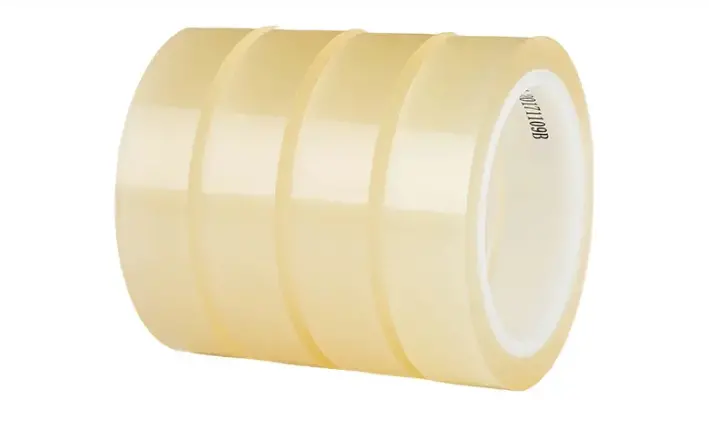
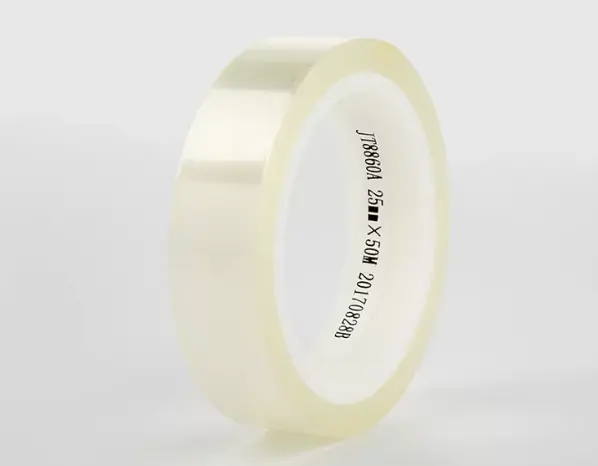
In resin lens production, the lens is formed between mold components while the resin undergoes a controlled curing process. Before the finished lens can be separated from the mold, those components need to stay in the intended position. The tape used during this stage is temporary, but its behavior can still affect the consistency of the process.
That makes mold tape for resin lens production different from a general-purpose fixing tape. It is applied to a process in which the materials around it may change over time. The resin is introduced, the mold assembly is handled, the curing cycle takes place, and the components eventually need to be separated. The tape has to remain useful through the part of this sequence where it is required, then stop being useful without creating another problem.
The practical role is easiest to understand through the mold assembly itself. If two mold components shift after positioning, the change may be small enough to go unnoticed during handling but large enough to affect the resulting lens. Tape provides a temporary mechanical hold while the assembly moves through the production process. It can also help maintain contact between components where a stable interface is required.
The important point is that the tape is not responsible for forming the optical surface. Its job is to support the conditions under which the optical surface is formed consistently.
The requirements on resin lens manufacturing tape become more demanding once the production cycle begins.
During initial assembly, operators are mainly concerned with whether the tape can be applied accurately and whether the mold stays where it is placed. Once resin processing and curing begin, the tape is exposed to the actual conditions of the manufacturing process. Contact time becomes longer, temperature may change, and the surrounding resin system can be different from the materials used in a standard adhesive test.
This is why a tape can appear perfectly satisfactory during assembly and still produce an unexpected result later in the cycle.
Consider a simple production sequence:
1. Mold components are positioned and temporarily fixed.
2. Resin is introduced and the assembly is prepared for curing.
3. The assembly remains together for the specified curing period.
4. The tape is removed or the mold is separated for the next operation.
At each point, the tape is doing something slightly different. Early in the process, dimensional stability and handling are important. During curing, the adhesive and backing have to remain stable under the process conditions. At removal, the bond needs to release in a controlled manner.
For this reason, tape for resin lens molding should be evaluated as part of the complete production cycle rather than as an isolated material placed on a test panel.
Resin lenses are often discussed by refractive index, but refractive index alone does not describe the environment in which the tape will operate.
A 1.49, 1.56, or 1.60 lens may involve different resin formulations, monomer systems, curing schedules, or production conditions. Two lenses with different refractive indexes may therefore create different requirements for the tape, while two products with similar refractive indexes may still use different processing conditions.
For a lens mold tape for resin lens production, this distinction matters because the adhesive does not interact with an abstract “lens grade.” It interacts with the actual manufacturing environment.
Before qualifying a tape, production teams should establish the variables that will remain fixed during testing:
· Resin or monomer system
· Mold material and surface condition
· Curing method and cycle
· Tape application method
· Required contact time
· Removal procedure
The purpose is not to create a complicated laboratory specification. It is to prevent an apparently successful tape selection from being based on the wrong test conditions.
A tape that works with one resin system should therefore be treated as validated for that process, rather than automatically considered suitable for every resin lens production line.
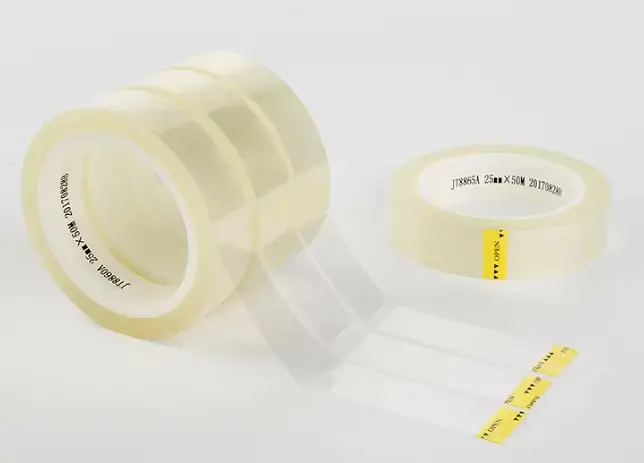
Initial adhesion is useful for screening materials, but it says little about what happens after the tape has remained in the production environment for the required period.
Imagine a tape being applied to a mold and tested immediately. It holds firmly, the application looks clean, and the operator has no difficulty working with it. That result only answers the first question: can the tape hold the assembly at the beginning?
The production line asks several additional questions.
Will the tape remain in place after the curing cycle begins? Does the backing retain its shape? Does the adhesive become noticeably harder to release after extended contact? Can the operator remove the tape without damaging or contaminating the working surface?
These questions become particularly relevant when a production cycle is changed. A new resin formulation or longer curing period can turn a previously acceptable resin lens tape into a material that needs to be requalified.
A useful comparison should therefore include the tape's condition before and after processing.
Checkpoint | Production question |
Before curing | Is the mold held accurately after application? |
During curing | Does the tape remain stable without lifting or shifting? |
After curing | Has the adhesive behavior changed significantly? |
During removal | Can the tape be separated at a controlled rate? |
After removal | Is the mold or contact surface still acceptable for the next operation? |
This type of test provides more useful information than comparing peel adhesion values alone because it reflects the actual sequence the tape must survive.
The contact surface also deserves attention. A tape can perform well on a flat test surface but behave differently when applied around the shape of an actual lens mold.
When tape is wrapped or positioned around a curved area, the backing has to follow the surface without excessive tension. If it cannot conform adequately, the edges may gradually lose contact. If the material stretches too easily during application, however, the operator may not be able to reproduce the same application condition from one assembly to another.
This becomes a process-control issue rather than simply an adhesive-strength issue.
For example, an operator may apply two pieces of the same tape to apparently identical molds. One piece is applied with slightly more tension and the other with less. If the tape construction is highly sensitive to stretching, the resulting contact condition may be different even though the product itself has not changed.
That is why the physical construction of optical lens mold tape matters alongside its adhesive system. Backing flexibility, dimensional stability, thickness, and handling characteristics all contribute to how consistently the tape can be applied to the mold.
The goal is not maximum flexibility or maximum adhesion. The goal is a tape that can be applied repeatedly in the intended configuration and remain there for the required part of the process.
One of the easiest mistakes in tape selection is to judge performance only at the point where the tape is applied.
In production, the tape eventually has to come off.
If removal requires excessive force, operators may slow the process or change their removal technique. If the adhesive becomes difficult to release after curing, the tape may no longer be suitable for the intended production cycle even though its initial holding performance was excellent.
This does not mean that every application requires extremely low adhesion. A tape that releases too easily can create its own problem if the mold assembly moves during handling.
The useful range lies between these two outcomes:
enough holding force during the required process, followed by predictable release when the process is complete.
That balance is particularly important when production volumes are high. A small removal problem repeated hundreds or thousands of times can become a measurable labor and yield issue.
For a new resin lens manufacturing tape, the most reliable qualification method is usually a controlled production trial rather than a long list of laboratory numbers.
The tape should be applied using the same method used on the production line. The mold should have the same surface condition, and the resin should go through the same curing cycle. If the tape is normally removed after a certain dwell period, that period should also be reproduced.
The trial should record not only whether the lens assembly survives the process, but also whether the tape creates variation between operators or batches.
A practical evaluation can focus on four questions:
· Did the mold remain correctly positioned throughout the required process?
· Did the tape maintain consistent contact under actual curing conditions?
· Could operators remove it without abnormal effort or process interruption?
· Was the result repeatable across multiple assemblies?
This approach is especially useful when changing from one tape to another. Instead of asking which product has the highest specification on paper, the production team can compare how each tape behaves under identical conditions.
It also makes troubleshooting easier. If a tape fails only after the curing cycle, the investigation can focus on process exposure. If it fails during application, the problem may instead relate to surface condition, application pressure, backing behavior, or mold geometry.
The value of mold tape for resin lens production comes from its ability to bridge several stages of manufacturing without becoming a permanent part of the assembly.
It supports the mold during the period when positioning matters, remains functional while the resin is processed, and then needs to leave the process cleanly enough for the next operation to continue. The right tape is therefore defined by the production window in which it has to work, not by a single performance number.
For manufacturers working with different resin lens applications, Mold Tapes for Optical Lens can be evaluated according to the actual mold configuration and production cycle. Specific lens grades may require separate validation, particularly when the resin formulation or curing conditions differ.
A useful way to approach selection is to start with the process rather than the tape:
What resin is being processed? How is the mold assembled? How long does the tape remain in place? What conditions does it experience before removal?
Once those questions are defined, tape performance can be evaluated against the requirements that actually matter on the production line. That is what makes a lens tape for resin lens applications useful: not simply that it can stick to the mold, but that its behavior remains predictable for the entire stage in which the manufacturing process depends on it.