 en
en vi
vi es
es th
th pt
pt ms
ms ko
ko ru
ru fr
fr de
de ar
ar hi
hi id
id





Sep 24,2026
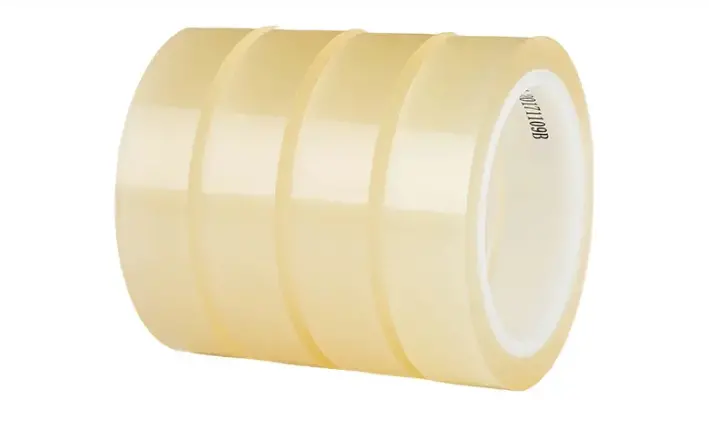
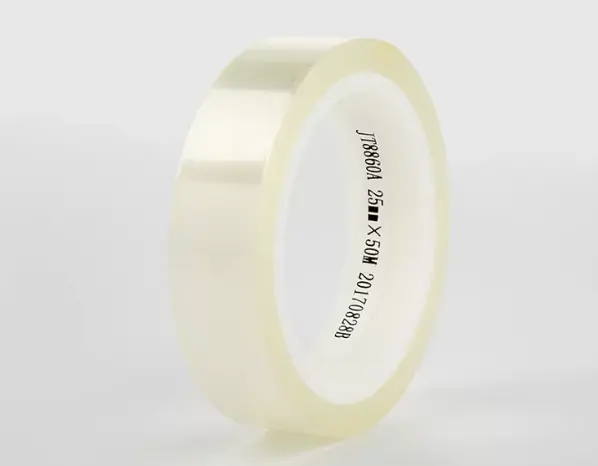
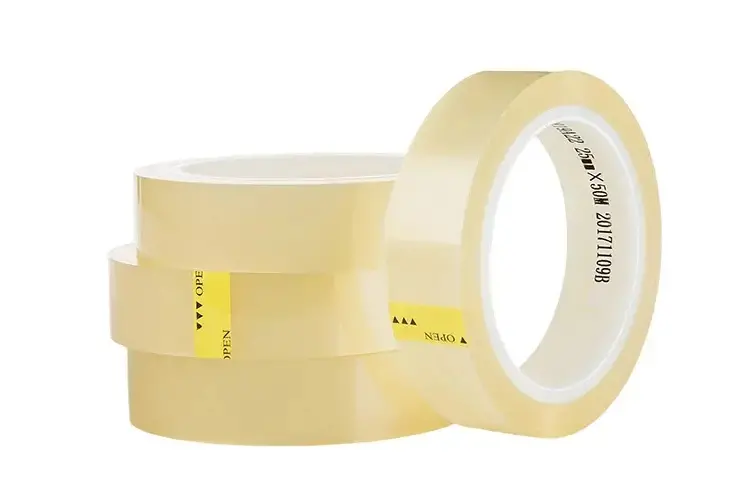
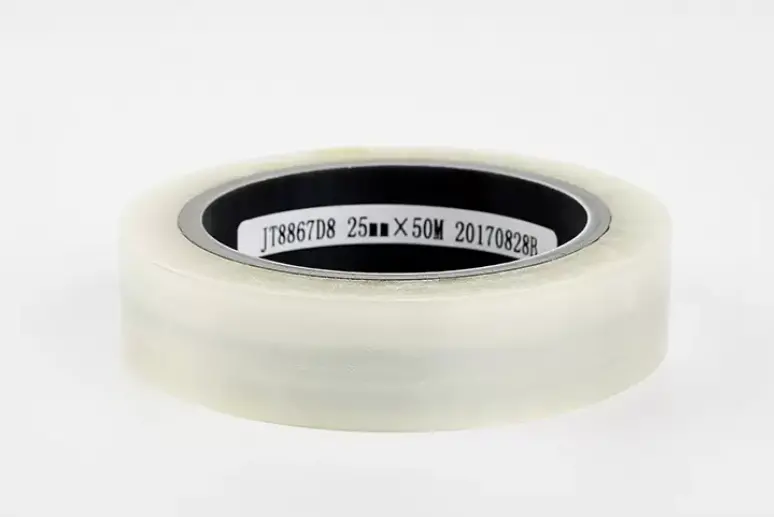
Custom Lens Mold Tape for Optical Lens Production
The refractive index of a resin lens affects more than optical performance. It also changes the way the lens behaves during blocking, grinding, polishing, coating, and other processing steps. As lens materials become thinner and higher-index, the tape used to secure and protect them has to match the processing conditions rather than simply provide strong adhesion.
A lens tape that works well on a 1.49 or 1.56 index resin lens may not be the best choice for a 1.67 or 1.74 lens. Differences in lens surface energy, curvature, processing temperature, adhesive strength, clean removal, and dimensional stability can all influence the result. Choosing tape by refractive index alone is therefore not enough. The better approach is to consider the complete lens-processing process and select a tape construction that provides the right balance of adhesion, flexibility, holding power, and removability.
For manufacturers working with several resin formulations, this distinction becomes particularly important. A production line may process conventional mid-index lenses in one batch and thinner high-index lenses in another, while the blocking and grinding equipment remains the same. The tape needs to perform consistently across these changing conditions without creating additional cleaning or rejection problems.
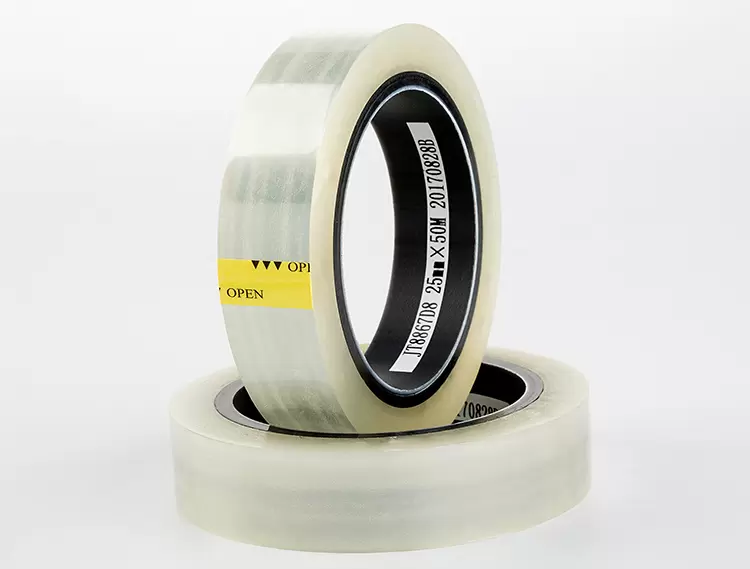
Refractive index describes how strongly an optical material bends light. In practical lens manufacturing, the commonly encountered resin ranges include 1.49, 1.56, 1.60, 1.67, and 1.74 refractive index lenses. Higher-index materials allow manufacturers to produce thinner lenses for comparable optical correction, but their processing characteristics are not identical to those of conventional resin lenses.
The tape itself does not need to have the same refractive index as the lens. What matters is how its adhesive and backing interact with the lens surface during processing. A tape used for lens blocking must maintain sufficient contact with the lens while resisting movement caused by grinding forces, rotation, coolant, or changes in temperature. At the same time, the adhesive should release without leaving excessive residue or damaging the processed surface.
This is why lens tape for resin lenses should be selected according to the actual combination of lens material and processing conditions. A tape supplier should ideally evaluate the lens substrate, blocking method, processing equipment, adhesive requirements, and removal conditions rather than recommend a single tape for every index.
The five refractive-index ranges represent different processing requirements. They should not be treated as interchangeable simply because all of them are resin-based optical materials.
Lens refractive index | Typical processing consideration | What to look for in lens tape |
1.49 | Conventional resin lens processing with relatively common material characteristics | Balanced adhesion, flexibility and clean removal |
1.56 | Mid-index lens processing where surface compatibility becomes more important | Stable adhesion without excessive residue |
1.60 | Higher-index processing with greater emphasis on dimensional stability and secure blocking | Reliable holding force and controlled release |
1.67 | High-index, thinner lens designs requiring careful processing control | Strong but controlled adhesion, conformability and clean removal |
1.74 | Ultra-high-index lens processing where thin geometry makes processing accuracy especially important | Consistent holding, good surface contact and predictable removal |
These are selection guidelines rather than rigid rules. The same index can be produced with different resin formulations and surface treatments, so two 1.67 lenses may not behave identically when contacted by the same adhesive.
For this reason, 1.67 lens tape and 1.74 lens tape should not automatically be considered interchangeable. The correct choice depends on the specific lens material and production process.
A 1.49 lens tape is generally used with conventional resin lenses where the priority is reliable blocking and straightforward removal. In these applications, extremely aggressive adhesion is not necessarily an advantage. If the adhesive bonds too strongly to the lens surface, operators may have difficulty removing the tape after processing, and adhesive residue can increase cleaning requirements.
For standard lens production, the more useful characteristics are stable adhesion throughout grinding, sufficient conformability around the lens surface, and clean release after processing. A tape with a flexible backing can also help maintain contact on curved surfaces without creating unnecessary stress points.
For manufacturers sourcing 1.49 lens tape for optical lens processing, the most useful evaluation is not simply the initial peel strength. The tape should be tested after the complete blocking and processing cycle, because coolant exposure, mechanical force, processing time, and temperature can change the adhesive's behavior.
The move from 1.49 to 1.56 lens tape does not automatically require a completely different tape construction, but it is a good point to begin paying closer attention to adhesive compatibility.
A suitable tape should establish consistent contact with the lens surface without requiring excessive application pressure. If the adhesive does not wet the surface properly, small areas of poor contact can develop during blocking. Conversely, an overly aggressive adhesive can make removal unnecessarily difficult.
For this reason, 1.56 lens tape for optical lens applications should be evaluated using both adhesion and release performance. If a production line experiences intermittent blocking movement, tape lift, or adhesive residue, changing to a stronger tape is not always the best solution. The underlying issue may instead be surface contamination, insufficient application pressure, unsuitable backing flexibility, or incompatibility between the adhesive and lens coating.
As lens index increases, lens designs often become thinner. That makes processing control increasingly important because the lens has less material available to tolerate errors during handling and machining.
A 1.60 lens tape sits between conventional and high-index lens processing requirements. It needs enough holding force to keep the lens stable during grinding while still allowing predictable removal afterward.
For manufacturers using 1.60 lens tape for resin lens applications, the adhesive should be assessed under actual processing conditions instead of relying solely on a supplier's laboratory peel value. The useful question is whether the tape maintains stable contact when the lens is subjected to rotational and grinding forces.
A good trial should examine:
· Whether the tape remains firmly attached throughout lens grinding and blocking.
· Whether the backing conforms evenly to curved lens surfaces without lifting at the edges.
· Whether the adhesive can be removed without excessive residue after processing.
· Whether the tape remains stable when exposed to coolant or other processing conditions.
This approach is more meaningful than selecting a tape simply because it is advertised as a "high adhesion" product.
1.67 lens tape is commonly considered for high-index resin lens processing, where thinner lens geometry places greater demands on process control. Tape movement that might be tolerable on a thicker conventional lens can become more problematic when working with a thinner lens.
The tape therefore needs to combine sufficient holding force with good conformability. Excessively stiff backing can reduce effective surface contact, while excessive adhesive strength can create removal problems later in the process.
For OEM production, it is useful to compare several 1.67 lens tape constructions using the same lens, blocking equipment, processing parameters, and removal procedure. This produces a much more reliable result than comparing datasheet values in isolation.
The 1.74 refractive index lens tape category deserves particular attention because 1.74 lenses are designed for very thin optical profiles. The thinner geometry can make precise blocking and stable positioning more important during subsequent machining.
The tape must follow the lens surface closely and maintain stable contact without interfering with the processing operation. A tape that performs adequately on a lower-index lens may still be unsuitable if it does not conform well to the geometry of a thinner 1.74 lens.
For manufacturers purchasing 1.74 lens tape for ultra-high-index lens applications, three properties deserve particular attention: controlled adhesion, backing flexibility, and clean removal. The goal is not to find the strongest adhesive available. The goal is to maintain accurate positioning during processing and then release predictably when the operation is complete.
A common mistake in tape selection is to compare products primarily by peel adhesion. Peel strength is useful, but it does not describe how the tape will behave during actual lens processing.
For example, a tape may show a high peel value while performing poorly during blocking because its backing does not conform well to the lens. Another tape may have moderate peel adhesion but provide better processing stability because it maintains uniform contact across the curved surface.
The more useful evaluation considers several characteristics together:
Property | Why it matters during lens processing |
Adhesion | Keeps the tape and lens securely connected during processing |
Conformability | Allows the tape to maintain contact with curved lens surfaces |
Backing strength | Helps prevent stretching or movement under processing forces |
Dimensional stability | Reduces unwanted movement during extended processing |
Clean removal | Minimizes adhesive residue after the operation |
Surface compatibility | Reduces the risk of adhesion problems or surface damage |
Temperature resistance | Helps maintain adhesive performance when processing generates heat |
Process consistency | Supports stable results across repeated production cycles |
This is particularly important for manufacturers processing multiple lens indexes. Instead of keeping one generic optical lens tape for every application, it can be more efficient to establish a small number of qualified tape grades for defined lens and process combinations.
The term "lens processing" covers several operations, and the tape does not necessarily experience the same conditions throughout the production cycle.
During lens blocking, the primary requirement is stable positioning. The tape must establish sufficient contact and prevent movement without requiring excessive pressure or creating deformation.
During lens grinding, mechanical forces become more significant. The tape must maintain its position while the lens is subjected to rotation, cutting or grinding forces and potentially coolant exposure.
During lens polishing, processing conditions may change again. The tape should continue to provide adequate support without creating unwanted movement or contamination.
This means that a tape selected only from a static adhesion test may not perform as expected on the production line. A better qualification process follows the tape through the actual manufacturing sequence.
For manufacturers developing a dedicated lens tape for lens grinding application, testing should therefore include the real grinding cycle rather than only an initial adhesion test.
Adhesive residue is one of the most practical issues in lens tape selection. A tape can hold extremely well during processing but still create downstream problems if it leaves adhesive behind after removal.
Residue can increase cleaning time and may become more difficult to remove if it has been exposed to heat or processing chemicals. In high-volume production, even a small increase in cleaning time can affect throughput.
To reduce this risk, manufacturers should control both the tape and the application process. The lens surface should be clean and dry before application, and the tape should be applied with consistent pressure. Storage conditions also matter because adhesive properties can change when tape is stored outside its recommended temperature or humidity range.
A useful qualification procedure is to record the condition of the lens immediately after tape removal and again after the normal cleaning process. This helps distinguish between a tape that genuinely leaves excessive residue and a process issue that can be corrected through application or removal conditions.
Not necessarily.
Using one tape across multiple lens indexes can simplify purchasing and inventory, but it is only practical when the tape has been validated across all relevant materials and processing conditions. A tape that works on 1.49 and 1.56 lenses may not provide the same performance on 1.67 or 1.74 lenses.
For production environments handling a wide range of optical materials, a more practical approach is to group applications according to processing behavior rather than index alone. For example, conventional resin lenses can share one qualified tape grade, while high-index lenses may require another grade with different conformability or adhesive characteristics.
The decision should ultimately be based on production data: blocking stability, processing yield, removal behavior, residue, cleaning time, and lens surface quality.
When developing or sourcing OEM lens tape, manufacturers can avoid unnecessary trial-and-error by following a controlled evaluation process.
Record the lens material, refractive index, surface condition, coating status, curvature, and typical dimensions. If the same tape will be used on several lens types, test the most demanding lens rather than assuming performance will transfer automatically.
Use the same blocking equipment, application pressure, grinding parameters, coolant conditions, processing duration, and removal method used in production. Laboratory testing is useful for screening, but the final decision should come from production-representative testing.
Track whether the tape moves, lifts, wrinkles, stretches, leaves residue, or becomes difficult to remove. A simple evaluation sheet can include:
· Blocking stability during the complete processing cycle.
· Adhesion before and after processing.
· Removal force and residue condition.
· Surface appearance after tape removal.
· Cleaning time required before the next operation.
This provides a much clearer basis for choosing between 1.56, 1.60, 1.67, and 1.74 lens tape grades.
Standard tape is often sufficient for routine lens processing, but customized construction can become valuable when a manufacturer has unusual lens materials, automated application equipment, demanding removal requirements, or high production volumes.
Customization may involve the adhesive system, backing thickness, width, roll length, release characteristics, or die-cut format. The objective should be to solve a defined production problem rather than customize the tape simply for the sake of having a proprietary specification.
For example, an OEM may need a thinner backing to improve conformity on a particular lens geometry, a different adhesive level to reduce removal force, or a specific roll format for automated equipment. In these cases, working directly with a lens tape manufacturer can provide more flexibility than selecting from standard retail specifications.
The refractive index is an important starting point, but it should not be the final selection criterion. A useful purchasing decision connects the lens index to the actual manufacturing requirement.
Application | Recommended selection focus |
Conventional 1.49 resin lens | Balanced adhesion and clean removal |
1.56 mid-index lens | Surface compatibility and stable adhesion |
1.60 high-index lens | Holding force, conformability and dimensional stability |
1.67 high-index lens | Secure blocking with controlled release |
1.74 ultra-high-index lens | Precise positioning, conformability and predictable removal |
Multiple lens indexes | Validate a common grade before standardizing |
Automated lens processing | Backing consistency, roll quality and controlled release |
High-volume OEM production | Process stability, repeatability and customized specifications |
For manufacturers that process different optical materials, the most efficient strategy is usually not to select tape based on a single specification. Instead, establish a qualification standard that connects refractive index, lens material, processing method and tape performance.
A suitable lens tape should make the manufacturing process more predictable, not simply provide the highest possible adhesion. The right product holds the lens securely during blocking and machining, conforms to the surface, remains stable throughout processing, and can be removed without creating unnecessary residue or cleaning work.
For conventional lenses, a balanced tape construction may be sufficient. As the lens index rises to 1.60, 1.67 and 1.74, however, greater attention should be given to conformability, processing stability and controlled removal. This is especially important for thin high-index resin lenses, where processing accuracy has a direct effect on finished-lens quality.
Jantape's range of Mold Tapes for Optical Lens covers applications across optical lens processing, including different refractive-index lens requirements. Manufacturers evaluating 1.49, 1.56, 1.60, 1.67 or 1.74 lens tape can use their actual lens material and processing conditions as the starting point for product selection rather than choosing solely by index.
The most reliable choice comes from matching the tape to the complete process: secure blocking, stable grinding, controlled adhesion, clean removal and consistent production performance.