 en
 vi
 es
 th
 pt
 ms
 ko
 ru
 fr
 de
 ar
 hi
 id





Nov 27,2026
What Are the Different Types of Paper Splicing Tape?
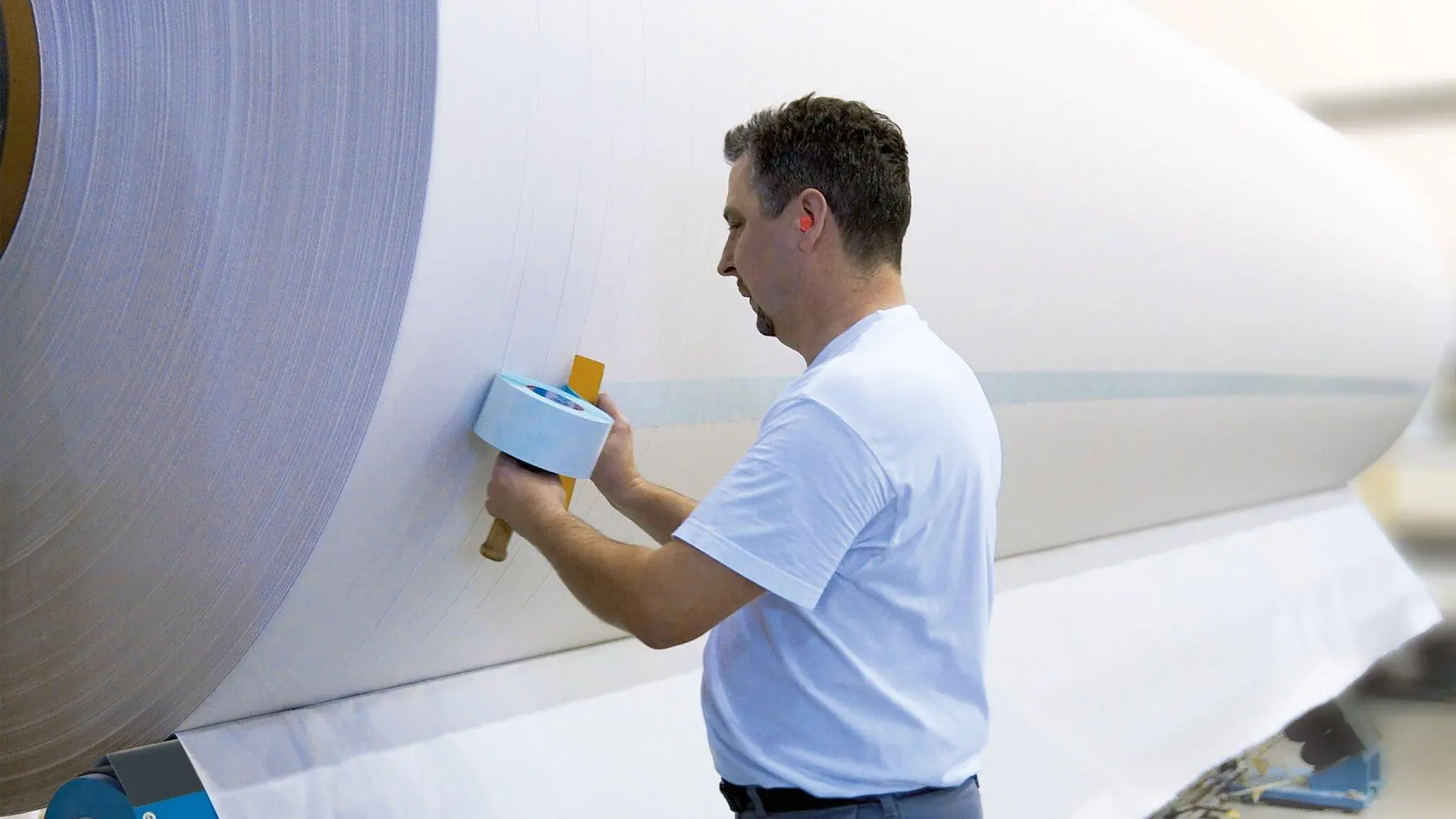
Paper splicing is an essential part of continuous production in paper mills, printing plants, and converting facilities. When a paper roll runs out, the remaining web needs to be joined to a new roll so that the production line can continue without restarting the threading process. The tape used for this connection must suit the paper grade, splice design, and operating conditions.
Not all paper splicing tape works in the same way. Some products are designed to break down during paper recycling, while others prioritize the mechanical stability of the joint. Tape construction also varies, with single-sided and double-sided adhesive designs serving different splice configurations. Carrier materials, adhesive chemistry, and coating methods add further differences.
Understanding these distinctions makes it easier to narrow down the right tape for a particular paper converting or manufacturing process.
One of the most important distinctions in paper splicing tape is whether the tape is designed to be repulpable. This matters particularly in paper mills and facilities where recovered paper and production waste return to the pulping process.
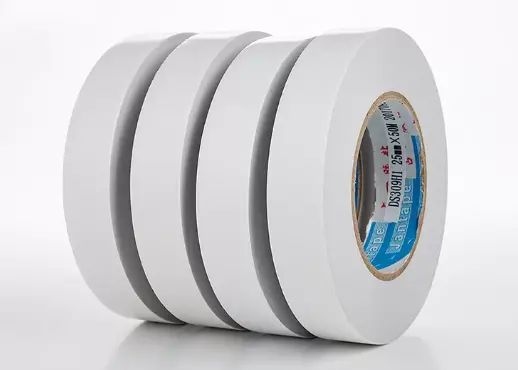
Repulpable splicing tape is designed for paper manufacturing and converting processes where the splice material may enter a paper recycling or repulping system. Its construction is developed to meet specific requirements for compatibility with the pulping process.
These tapes commonly use paper-based or fiber-based carriers combined with adhesive systems designed for repulping applications. Depending on the product, the carrier and adhesive are engineered to disperse or break down under defined processing conditions.
Typical applications include paper mills handling continuous paper production, paper converting operations where production waste is recovered, and newspaper or commercial printing processes.
A key consideration is that water solubility and repulpability are not interchangeable terms. An adhesive that dissolves in water does not automatically make the entire tape repulpable. The carrier, adhesive, and complete tape construction need to be evaluated against the relevant repulpability requirements.
For processes that specifically require water-soluble adhesive systems, buyers can also review Jantape's water-soluble paper splicing tape range. The distinction is important: the suitability of any product for a repulping system should still be confirmed through its complete construction and relevant test results, rather than inferred from water solubility alone.
When evaluating repulpable options, check the tape's repulpability documentation, wet-grab performance, adhesion to the paper grade, and compatibility with the mill's recycling process. If water-based processing is involved, it is also worth checking whether the adhesive remains stable during application and storage.
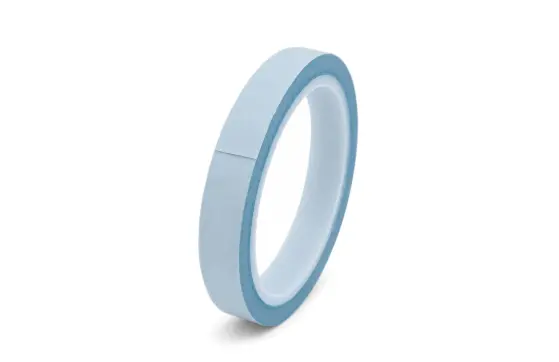
Non-repulpable splicing tape is used when repulpability is not a primary requirement. Its design focuses more directly on bonding performance, splice construction, and compatibility with the production process.
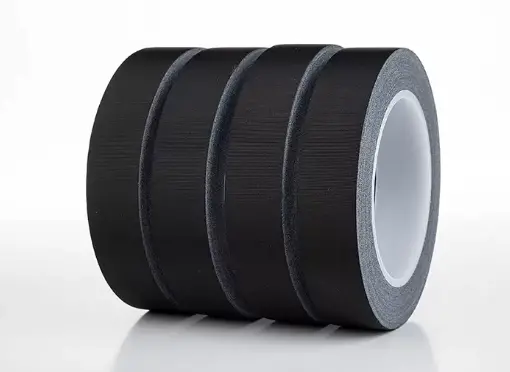
Depending on the application, these tapes may use PET, PVC, PE, paper, or other carrier materials. Adhesive systems can include rubber-based or acrylic formulations, selected according to the surface being bonded and the required operating conditions.
Common applications include paper coating, laminating, printing, converting, and other roll-to-roll processes where the splice does not need to enter a repulping system. These operations can have different requirements for adhesion, heat resistance, and joint thickness, so the tape should be selected around the actual process rather than its category name alone.
When evaluating this type of tape, buyers should consider adhesion to coated and uncoated paper surfaces, initial tack and holding power under production tension, resistance to heat and shear forces where required, carrier strength and thickness, and whether adhesive residue could affect downstream equipment or products.
The choice between repulpable and non-repulpable tape should therefore start with the destination of the material after processing. If the splice will enter a paper recycling system, repulpability needs to be confirmed. If not, the focus can shift toward the bonding and mechanical requirements of the application.
Another way to classify paper splicing adhesive tape is by the number of adhesive-coated surfaces. Single-sided and double-sided tapes create different joint structures, so they are not simply interchangeable alternatives.
Single-sided splicing tape has adhesive on one side of its carrier. It is commonly used when the tape needs to cover the joint between two paper ends rather than bond two overlapping surfaces internally.
For example, in a butt splice, the two paper ends meet edge to edge. The tape is applied across the seam to hold them together. The carrier bridges the gap and provides support while the adhesive bonds to the paper on either side.
This construction is useful when the splice design requires a visible tape layer over the joint. Its suitability depends on the carrier's strength, the adhesive's bonding performance, and the thickness that the production equipment can accommodate.
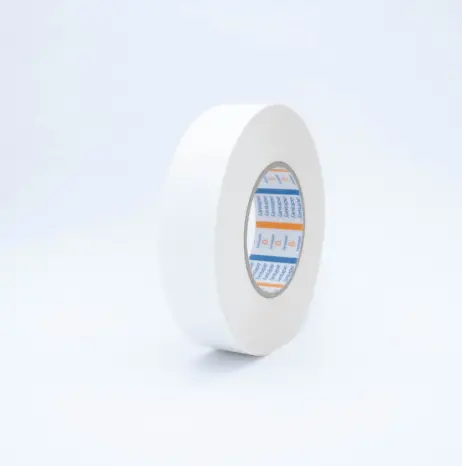
Double-sided splicing tape has adhesive on both sides of its carrier. It is commonly considered for overlap splices, where the end of one paper web overlaps with the incoming web and the tape bonds the two surfaces together.
The adhesive on each side must provide suitable bonding to the corresponding paper surfaces. This is particularly important when the two sides have different coatings, textures, or surface characteristics.
Double-sided constructions are used in various roll-to-roll operations, including coating, laminating, and converting. Some are designed for manual splicing, while others are developed for specific automated splice systems.
However, double-sided tape is not automatically the better choice for high-speed production. The correct construction depends on the splice method, machine design, paper grade, and operating conditions. A tape that performs well in a manual overlap splice may not be suitable for a particular flying-splice system.
The carrier is the backing material that supports the adhesive layer. It influences how the tape handles during application, how the splice behaves under tension, and how much additional thickness is introduced at the joint.
Three carrier groups are commonly considered in industrial splicing applications.
| Carrier material | Main characteristics | Selection considerations |
|---|---|---|
| Paper | Paper-based construction that can suit certain paper joining and converting applications | Paper grade, flexibility, strength, and repulpability requirements |
| Tissue or non-woven | Flexible construction that can conform to surfaces and support different adhesive designs | Thickness, tensile properties, and splice configuration |
| PET film | Film carrier offering dimensional stability and mechanical support | Joint thickness, tensile strength, and downstream process compatibility |
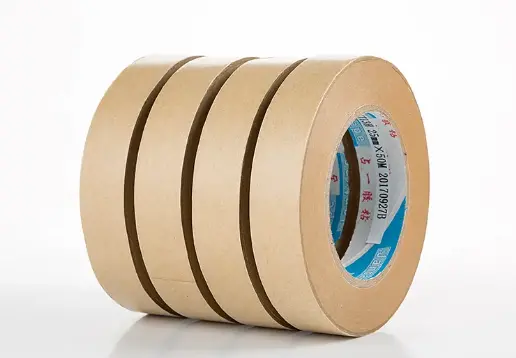
Paper carriers are used in splicing tapes designed for applications where a paper-based construction is preferred. They can be considered when compatibility with paper processing or the overall splice design is important.
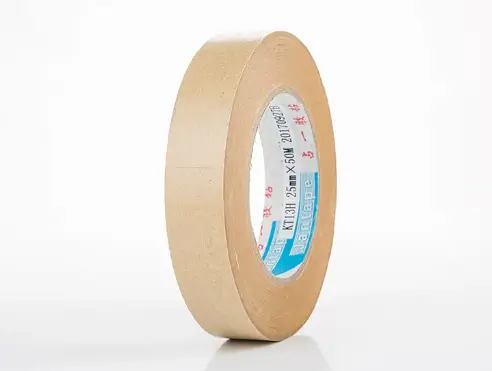
For example, Jantape's Kraft Paper Splicing Tape KT13H is one paper-based product buyers can evaluate when comparing carrier constructions. Its suitability should be assessed against the paper grade, splice design, and production conditions rather than assumed from the carrier material alone.
A paper carrier does not automatically guarantee that a tape is repulpable. The adhesive and complete construction must also meet the required specifications.
Tissue and non-woven carriers offer a flexible structure that can adapt to different bonding designs. Their conformability can be useful when the tape needs to follow the surface of the substrate without adding an excessively rigid layer.
The actual performance depends on carrier weight, thickness, tensile strength, and adhesive formulation. These properties should be checked against the paper grade and splice design rather than judged by carrier type alone.
PET film carriers are used where a film-based construction is required. They can provide dimensional stability and mechanical support, making them relevant to certain converting and roll-to-roll applications.
For paper splicing, the main considerations include the film's thickness, tensile behavior, adhesive compatibility, and the effect of the finished joint on downstream processing.
The carrier material should always be evaluated as part of the complete tape construction. A strong backing cannot compensate for an adhesive that does not bond properly to the paper surface.
Identifying the tape category is only the first step. The final selection needs to reflect the actual paper, splice configuration, and production environment. This is particularly relevant in printing and packaging operations, where paper rolls may pass through coating, laminating, printing, and converting stages. The tapes for printing and packaging applications cover a range of process requirements, but the right splicing construction still depends on the specific material and equipment.
Paper surfaces vary considerably. Uncoated paper, coated printing paper, kraft paper, and specialty paper can have different surface textures and adhesive requirements.
Coatings, surface treatments, dust, and paper roughness may all influence how well a tape bonds. A tape that performs adequately on uncoated paper may not provide the same result on a heavily coated surface.
Before selecting a product, confirm whether the paper is coated or uncoated, whether the bonding surface is smooth or rough, whether both paper layers have similar surface characteristics, and whether the paper itself can withstand the forces applied during splicing.
Testing the actual paper grade is more reliable than choosing tape based only on a general material description.
If production waste or the finished splice will enter a pulping system, confirm whether the complete tape construction meets the mill's requirements.
Do not rely solely on descriptions such as water-soluble, paper-based, or environmentally friendly. Ask for relevant test documentation and confirm that the product is suitable for the intended recycling process.
Where repulpability is not required, other factors such as adhesion, carrier strength, and resistance to operating conditions may carry more weight.
The splice method determines how the two paper ends are joined and what role the tape needs to perform.
Butt splice: The paper ends meet edge to edge, with tape covering the seam. A single-sided construction is commonly considered.
Overlap splice: The paper ends overlap, and a double-sided construction may be used to bond the two surfaces.
V or W splice: The paper ends are prepared in a shaped pattern to create a particular joint geometry. Tape selection must match the construction and equipment requirements.
The tape's width, thickness, carrier strength, and adhesive placement should be checked against the actual splice design. A mismatch can create an uneven joint or interfere with the web path.
Production speed affects how much stress the splice experiences as it passes through the machine. A tape used in a manual roll change may have different requirements from one used in an automated flying-splice operation.
Other conditions also matter, including web tension, temperature, humidity, and contact with rollers or processing equipment.
For high-speed applications, evaluate both initial bonding and the ability of the completed joint to withstand dynamic loading. If the process involves heat, confirm the tape's temperature resistance under the actual exposure conditions rather than relying on a general maximum temperature figure.
It is also useful to review the equipment's splice specifications before choosing a tape. Machine speed alone does not determine suitability; the roll-change mechanism and splice geometry are equally important.
The following table provides a starting point for comparing common tape constructions. It is not a substitute for checking the product specification against the actual production process.
| Production requirement | Tape type to evaluate | Main point to verify |
|---|---|---|
| Splice material enters a paper recycling process | Repulpable splicing tape | Complete construction and repulpability test results |
| Repulpability is not required | Non-repulpable splicing tape | Adhesion, carrier strength, and process compatibility |
| Tape covers an edge-to-edge joint | Single-sided splicing tape | Carrier support and bonding on both sides of the seam |
| Tape bonds overlapping paper surfaces | Double-sided splicing tape | Adhesion to both paper surfaces and joint thickness |
| Flexible carrier construction is needed | Tissue or non-woven splicing tape | Conformability and mechanical properties |
| Film-based carrier is preferred | PET-based splicing tape | Dimensional stability and downstream compatibility |
Repulpable splicing tape is designed to meet specific requirements for paper recycling and pulping processes. Non-repulpable splicing tape is selected primarily for its bonding and mechanical performance where repulpability is not required. The complete tape construction, rather than the adhesive or carrier alone, determines its suitability.
Not in every application. Double-sided tape is commonly considered for overlap splices, while single-sided tape is often used to cover butt-splice joints. The appropriate choice depends on the splice design, paper surface, machine configuration, and required joint thickness.
There is no single tape construction that suits every high-speed paper line. Selection should account for paper grade, splice method, web tension, machine design, and operating conditions. Initial tack and holding performance should be evaluated together under representative production conditions.
It depends on the complete tape construction and the requirements of the recycling process. Water solubility alone does not establish repulpability. Buyers should request relevant test results and confirm compatibility with the intended pulping system.