 en
 vi
 es
 th
 pt
 ms
 ko
 ru
 fr
 de
 ar
 hi
 id





Nov 20,2026
How to Choose Adhesive Tape for Plastic and Metal Surfaces
Kraft paper tape is widely used in packaging operations where a paper-based sealing or fastening material is preferred over conventional plastic tape. Depending on its backing, adhesive system and construction, it can be used to close cartons, bundle paper products, secure packaging components and support different stages of paper processing.
However, not all kraft paper tapes are designed for the same job. A pressure-sensitive tape intended for carton sealing has different requirements from a water-activated tape used on heavy shipping boxes or an industrial paper tape designed for roll-to-roll production. Choosing the right construction starts with understanding how the tape will be used.
Carton sealing is one of the most familiar applications of kraft paper tape. It is used to close shipping boxes, secure folded carton flaps and hold packages together during storage and transportation.
For lightweight cartons, a standard pressure-sensitive paper tape may provide sufficient adhesion. Heavier boxes, recycled corrugated board or packages exposed to rough handling may require a stronger construction. Water-activated kraft paper tape is another option for shipping applications because its adhesive is activated by moisture and forms a bond with the carton surface.
The choice should account for more than the weight of the contents. Corrugated board quality, surface dust, recycled fiber content and storage conditions can all affect bonding performance.
Paper converters, printing facilities and packaging workshops use kraft paper tape to hold stacks of paper, printed sheets, cardboard pieces and other paper-based materials together.
In these applications, the tape needs to secure the bundle without unnecessarily damaging the material during removal. Adhesion that is too aggressive can tear paper surfaces or leave adhesive residue, while insufficient tack may allow bundles to loosen during handling.
Tape width, backing strength and removal requirements should therefore be considered alongside initial adhesion.
Kraft paper tape can also be used to hold paper inserts, protective wrapping and packaging components in place. Its paper backing is suitable for applications where a paper-based material is preferred for appearance, handling or compatibility with the packaging process.
For businesses working toward more paper-based packaging systems, replacing selected plastic tapes with paper alternatives may help simplify material choices. The suitability of this change still depends on the complete packaging design, including the substrate, adhesive, product weight and distribution conditions.
Not every kraft paper tape is intended for finished-package sealing. In paper mills, printing operations and converting facilities, specialized paper tapes are used to connect material rolls, maintain production continuity and support high-speed processing.
These applications place different demands on the tape. It may need to withstand elevated temperatures, maintain adhesion under tension or provide reliable bonding during a splice. A product such as KT13H Kraft Paper Splicing Tape belongs to this industrial category. It is designed for paper splicing applications rather than serving as a direct substitute for general-purpose carton-sealing tape.
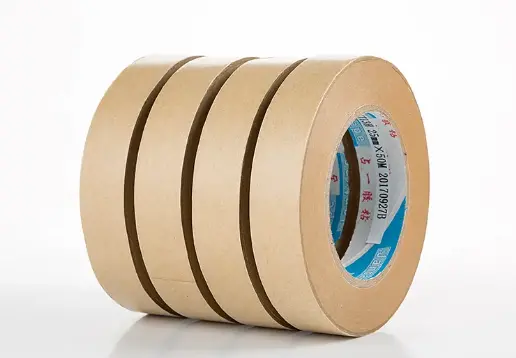
Two common constructions in paper packaging are pressure-sensitive kraft paper tape and water-activated paper tape. Both use a paper backing, but their bonding mechanisms and application processes are different.
| Comparison | Pressure-sensitive kraft paper tape | Water-activated paper tape |
|---|---|---|
| Adhesive activation | Bonds when pressure is applied | Requires moisture to activate the adhesive |
| Application | Applied directly from the roll | Usually applied with a water-dispensing system |
| Packing process | Convenient for manual and automated application | Often used with a dedicated dispenser |
| Typical use | General carton sealing and bundling | Carton sealing where a strong paper-to-board bond is required |
| Process considerations | Tack and surface compatibility are important | Water quantity and activation consistency matter |
Pressure-sensitive tape is generally easier to apply because it does not require a separate activation step. This makes it practical for routine packing work, particularly where operators need to seal different box sizes throughout the day.
Water-activated tape requires additional equipment or manual wetting, but it can form a strong bond with corrugated board when correctly applied. Its performance depends on the adhesive formulation, water application and carton surface. Neither construction is automatically better for every packaging operation.
A tape that performs well on one carton may not deliver the same result on another. Before selecting a product, packaging teams should evaluate the actual materials and working conditions rather than relying on a general description such as “high adhesion.”
Corrugated cartons vary in board grade, recycled fiber content, surface coating and porosity. These differences influence how well an adhesive wets and bonds to the surface.
For example, dusty or highly recycled board may be more difficult to seal than clean, smooth corrugated board. Testing the tape on the actual carton material is more reliable than comparing adhesive claims in isolation.
The required adhesion depends on what the tape needs to hold and how the package will be handled.
Lightweight cartons: A standard pressure-sensitive construction may be sufficient for routine sealing.
Heavy or bulky packages: Stronger backing and a suitable adhesive system may be needed to prevent the seal from opening during handling.
Paper bundles: Consider both holding strength and the risk of tearing or damaging the paper during removal.
Industrial splicing: Select a tape designed for the relevant paper-processing conditions rather than using ordinary packaging tape.
Manual packing, semi-automatic sealing and high-speed packaging lines place different demands on tape application. Roll dimensions, unwinding behavior, tape stiffness and dispenser compatibility can affect efficiency.
A tape that is easy to apply by hand may not feed consistently through automated equipment. For production lines, it is worth testing the complete application process, including dispensing, adhesion and performance after the package has been handled or stored.
Temperature, humidity and transit conditions can affect the reliability of a carton seal. Packages stored in humid warehouses or exposed to temperature fluctuations may require a construction suited to those conditions.
Where packaging performance is critical, test sealed cartons under representative storage and transportation conditions. Initial adhesion alone does not show whether the seal will remain intact throughout distribution.
Reinforced kraft paper tape uses additional reinforcement within the paper backing to improve its mechanical strength. This construction may be considered when the application requires greater resistance to tearing or when the tape needs to withstand more demanding handling.
The right choice depends on the package and sealing process. Standard kraft paper tape may be adequate for lightweight cartons and general bundling, while reinforced constructions may be more appropriate for heavier packaging requirements. The reinforcement itself does not guarantee a stronger carton seal: adhesive compatibility, carton surface and application pressure remain important.
For buyers comparing different paper-based options, Jantape's kraft tape product range provides a starting point for evaluating available constructions. The selection should be based on the intended application and confirmed through practical testing.
The word “kraft” describes the paper backing, not one fixed application or performance level. A tape used to seal shipping cartons does not necessarily have the properties required for paper roll splicing.
Industrial splicing applications may involve continuous production, web tension, elevated temperatures or specific bonding requirements. For example, Jantape's KT13H is a kraft paper splicing tape with a reported thickness of 0.13 mm and temperature resistance of 150°C for 30 minutes. These characteristics relate to its intended industrial use and should not be treated as general specifications for carton-sealing tape.
The distinction matters when sourcing materials. Buyers should identify whether they need a tape for packaging finished goods or for joining paper materials during manufacturing. The two applications require different performance evaluations.
For a broader comparison of adhesive constructions used across manufacturing and packaging, see Jantape's article on different types of adhesive tape and their industrial uses.
Yes. Suitable pressure-sensitive and water-activated kraft paper tapes can be used for carton sealing. The appropriate construction depends on carton weight, board surface, handling conditions and the packing process.
The paper backing can be compatible with paper recycling streams, but the complete tape construction matters. Adhesive type, reinforcement and local recycling requirements may affect whether a taped carton can be processed without removing the tape. Check the requirements of the relevant recycling facility.
Reinforced kraft paper tape contains additional strengthening material in its backing. It is intended for applications where greater mechanical strength is required. Standard kraft paper tape may be sufficient for lighter packaging and bundling tasks.
Not necessarily. Industrial kraft paper splicing tape is developed for joining paper materials during production. Its construction and performance requirements may differ from those of packaging tape, so the intended application should be confirmed before substitution.